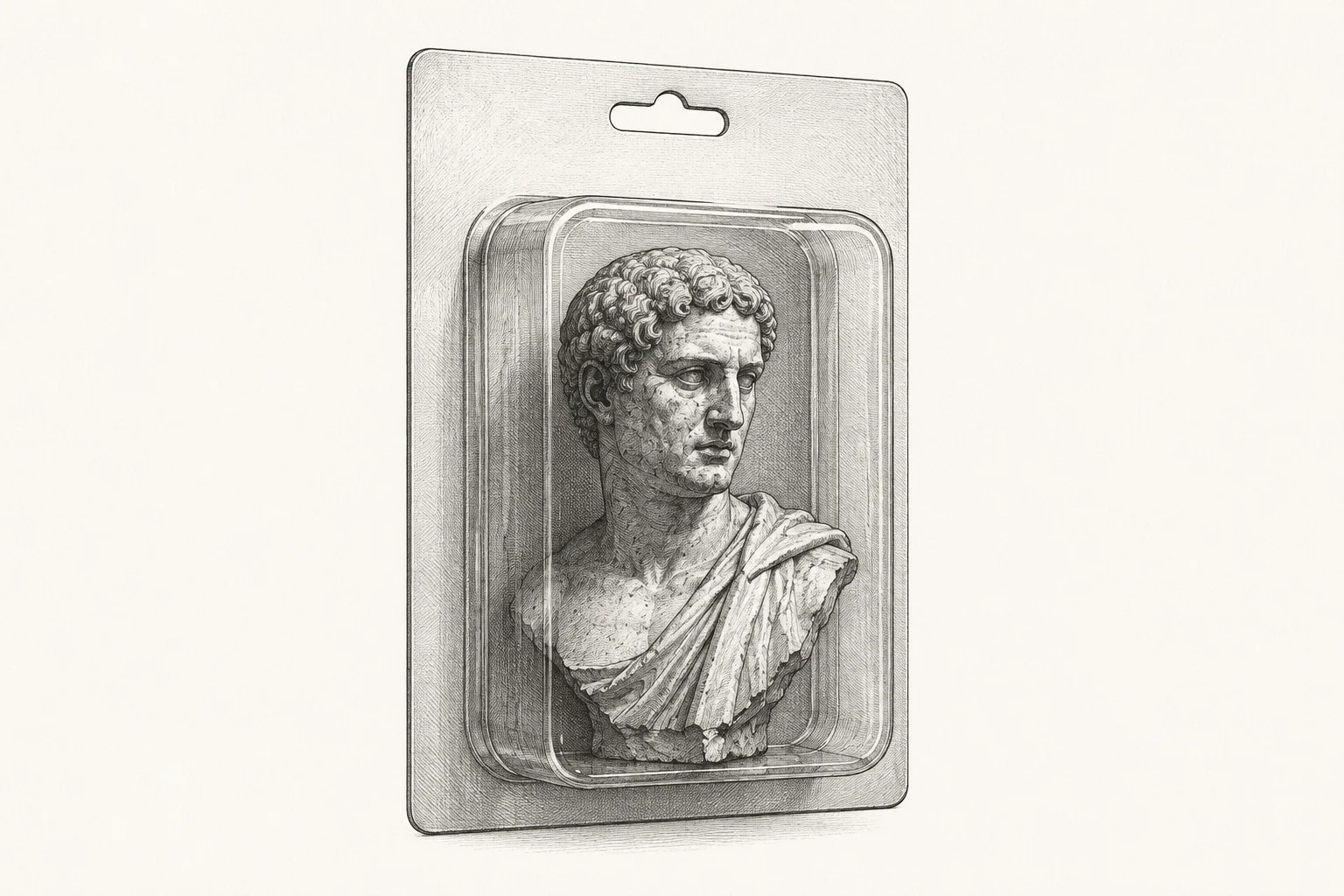
“Cottagecore.”
“Quiet luxury.”
“Clean girl.”
“Coastal grandma.”
They sound like styles, but increasingly they function like product categories.
You do not arrive at them through the particular shape of your life. You select one, learn its visual cues, and buy your way into the signal: the right knitwear, glassware, skincare, furniture, coffee order, font, camera filter.
The aesthetic comes first. The life is added later, if at all.
That is the strange reversal.
Style used to be an outcome.
It came from limitations, habits, geography, work, taste, money, community, and time. A fisherman dressed like a fisherman because he was one. Old countryside interiors looked a certain way because people lived with what lasted, what was available, and what they could repair. Even elegance had context: it was shaped by ritual, restraint, and repetition.
None of it needed a name.
Now we extract the visible layer, remove the conditions that created it, and package the remainder as an identity someone can adopt by Friday.
A cottage becomes cottagecore.
Inherited taste becomes quiet luxury.
Basic hygiene becomes the clean-girl aesthetic.
The problem is not that people enjoy beauty, or that they experiment with how they look. That has always been human.
The problem is mistaking a collection of purchasable references for a point of view.
A real style cannot be completed in a checkout cart because it is not a checklist. It is evidence. Evidence of what you notice, what you value, what you repeatedly choose, and what your actual life has taught you to keep.
The most interesting people do not look like they are trying to belong to an aesthetic. Their life has simply left a mark on them.
Maybe that is what feels rare now: not better taste, but taste with a backstory.